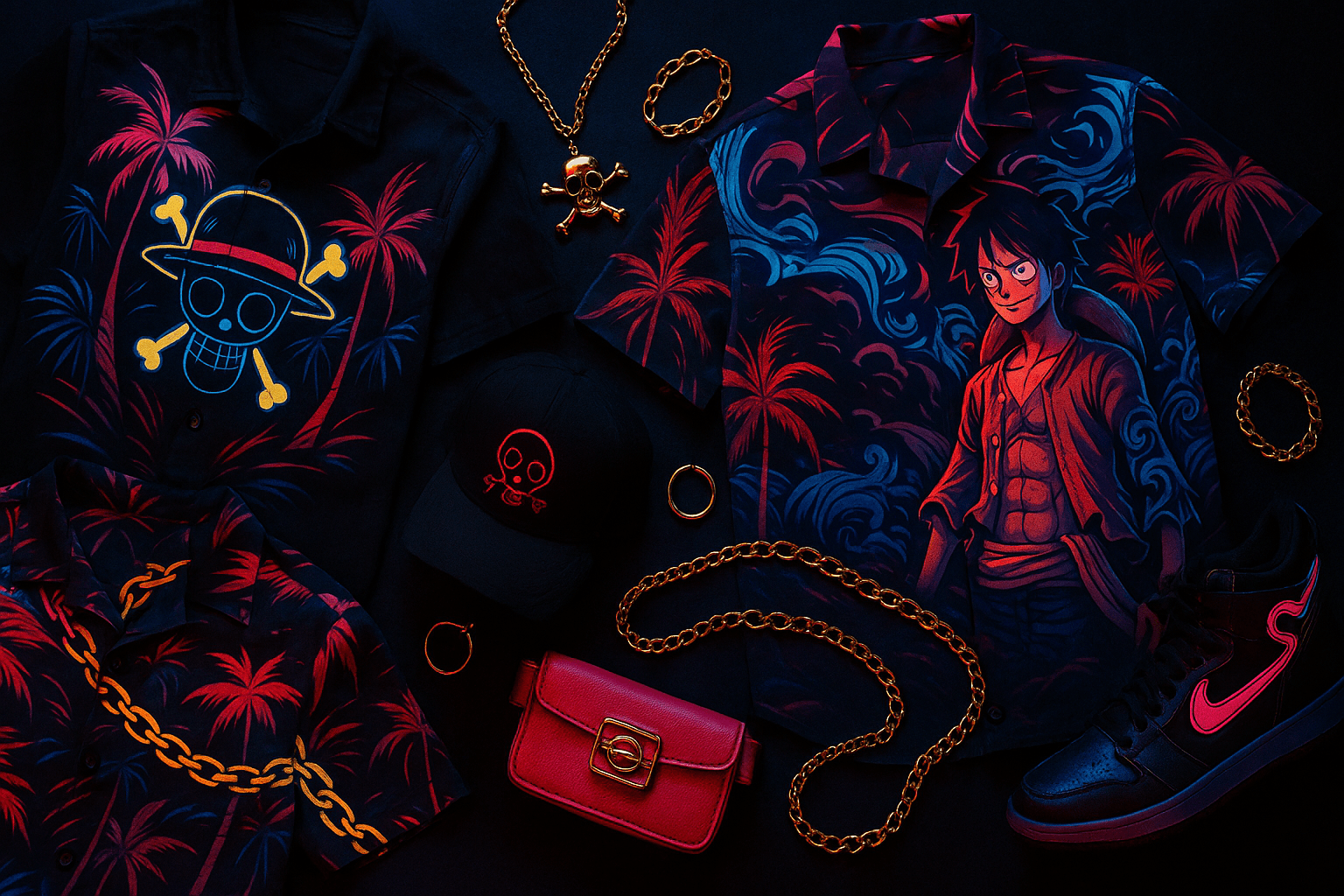
Luffy and Anti-Fashion as Identity
Luffy's outfit — red vest, blue shorts, sandals, straw hat — doesn't follow any fashion logic. It's not trying to be cool. It's not even trying to be practical. The straw hat is a keepsake, the shorts are comfortable, the vest is just there. And somehow, across 1000+ episodes, this non-outfit became one of the most recognizable silhouettes in anime history.
The lesson isn't that you should dress without thinking. It's that a silhouette reads clearly when the elements don't fight each other. Luffy's entire look is built around simplicity and the hat. Everything else exists to not distract from the hat. That's a real styling principle.
Each Arc Is a New Aesthetic
One Piece is basically a genre anthology with the same cast. Wano Arc is feudal Japan filtered through heavy manga influence. Dressrosa has Mediterranean color pop and gladiatorial drama. Thriller Bark is gothic horror. Skypiea is Pacific Island mythology with white and gold palette.
The Straw Hats adapt their wardrobe to each new environment, which means the same characters give you completely different fashion reference points depending on which arc you're watching. This is both a narrative device and a visual one — it keeps the show feeling fresh across decades.
Zoro: Consistency as Personality
While Luffy changes outfits and Nami shifts with each arc, Zoro mostly wears variations on the same thing: dark trousers, open jacket or no jacket, three swords. His consistency is itself a character statement. He doesn't engage with the fashion game because he doesn't need to. His presence communicates the same thing regardless of what he's wearing.
This maps to a specific type in fashion — the person who has figured out their formula and sticks to it. Not laziness. Not lack of style. A deliberate signature that reads as confidence.
The Warlords and Villain Fashion
One Piece's antagonists dress better than the protagonists, as a rule. Doflamingo's pink feather coat. Crocodile's fur coat and hook. Mihawk's black cape. The series uses excessively dramatic outfits as a shorthand for power and danger, which works because the contrast with the Straw Hats' practical, chaotic wardrobes is so pronounced.
Doflamingo specifically — the pink feather coat became instantly replicable and recognizable as a fashion statement in a way that most antagonist designs don't. It's flamboyant without being campish. It signals wealth and menace simultaneously. It's the kind of piece that would cost actual money in real life and you'd know exactly what you were buying.